

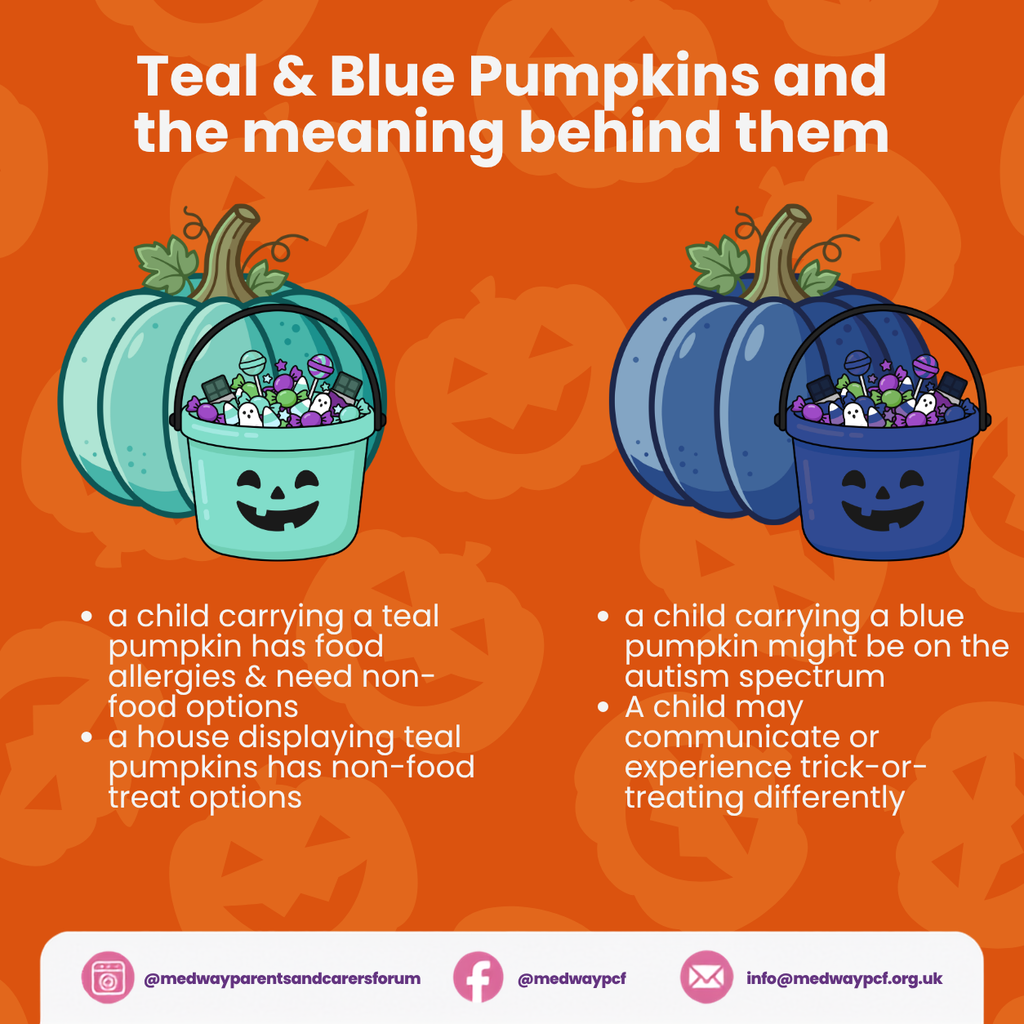
An inclusive Halloween can help more children enjoy the celebrations. The Teal Pumpkin Project supports children with food allergies, while blue pumpkins are sometimes associated with autism awareness at Halloween. If everyone understood these these symbols, alongside making small adjustments for children with special educational needs and disabilities (SEND), it could help make trick-or-treating more welcoming for everyone
At Medway Parent and Carers Forum, we want to raise awareness of these ideas and encourage more households across Medway to make Halloween accessible and inclusive for parent carers.
Learn more about the project: https://www.foodallergy.org/our-initiatives/awareness-campaigns/teal-pumpkin-project
Have you ever spotted a teal or blue pumpkin on someone’s doorstep and wondered what it means? This colourful idea is all about giving children more choice when they go trick-or-treating… and we would love to see more households in Medway Parents taking part!
What does a Teal pumpkin mean?
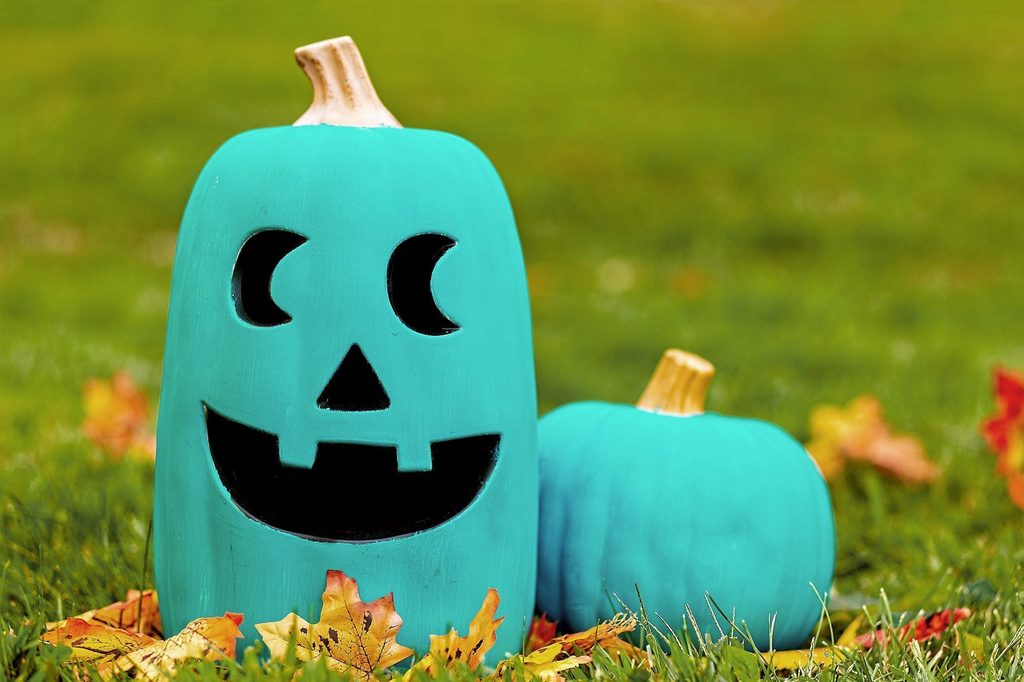
A teal pumpkin outside a home signals that non-food treats are available. These could include stickers, bubbles or colouring activities instead of sweets.
The Teal Pumpkin Project raises awareness of food allergies and helps children who cannot safely eat certain foods join in with trick-or-treating. Households can still offer sweets, but food and non-food treats should be kept in separate bowls.
Why does having a choice matter?
Halloween often revolves around sweets and chocolate. For children with food allergies, sensory reaction to food or dietary restrictions, this can mean missing out on treats their friends are enjoying.
Offering a non-food option gives children another way to take part, without needing to explain their needs at every doorstep. It is a small gesture that can help families feel welcome.
Simple non-food Halloween treats
You do not need to spend lots of money to offer an alternative. Ideas include:
- Halloween stickers
- Mini colouring books or colouring sheets
- Pencils or crayons
- Bubbles
- Bookmarks
Choose items suitable for the child’s age and needs, and avoid small parts for young children. Giving children a choice can also help them find something they enjoy.
What does a Blue pumpkin mean at Halloween?
You may also have seen children carrying blue pumpkin buckets while trick-or-treating. Blue pumpkins are sometimes associated with autism awareness at Halloween, with some families using them to indicate that their child is autistic.
An autistic child may experience Halloween differently. They might be non-verbal, find social interactions challenging, need extra time to respond or feel overwhelmed by loud noises, costumes and busy doorsteps.
However, not every autistic child will or should carry one, and children should never need to disclose a disability to receive kindness and understanding.
Whether a child carries a blue pumpkin, a traditional Halloween bucket or no bucket at all, a little patience can help make trick-or-treating more inclusive for everyone.
Making Halloween more welcoming for children with SEND
Beyond the Teal Pumpkin Project, there are other ways to make celebrations more accessible:
Keep things gentle. Consider avoiding flashing lights, sudden sound effects or decorations that jump out at visitors.
Welcome different ways of communicating. A child may not say “trick or treat” or “thank you”. Offer a warm welcome without requiring them to speak.
Make costumes optional. Some children find costumes uncomfortable or overwhelming. They should still be welcome to join in.
Allow time and space. Give children time to choose a treat, without rushing them or insisting they come closer.
Celebrate in a way that works for your family
Trick-or-treating will not suit every child, and that is okay. Decorating pumpkins, enjoying a favourite film or trying a quiet Halloween activity at home can be just as special.